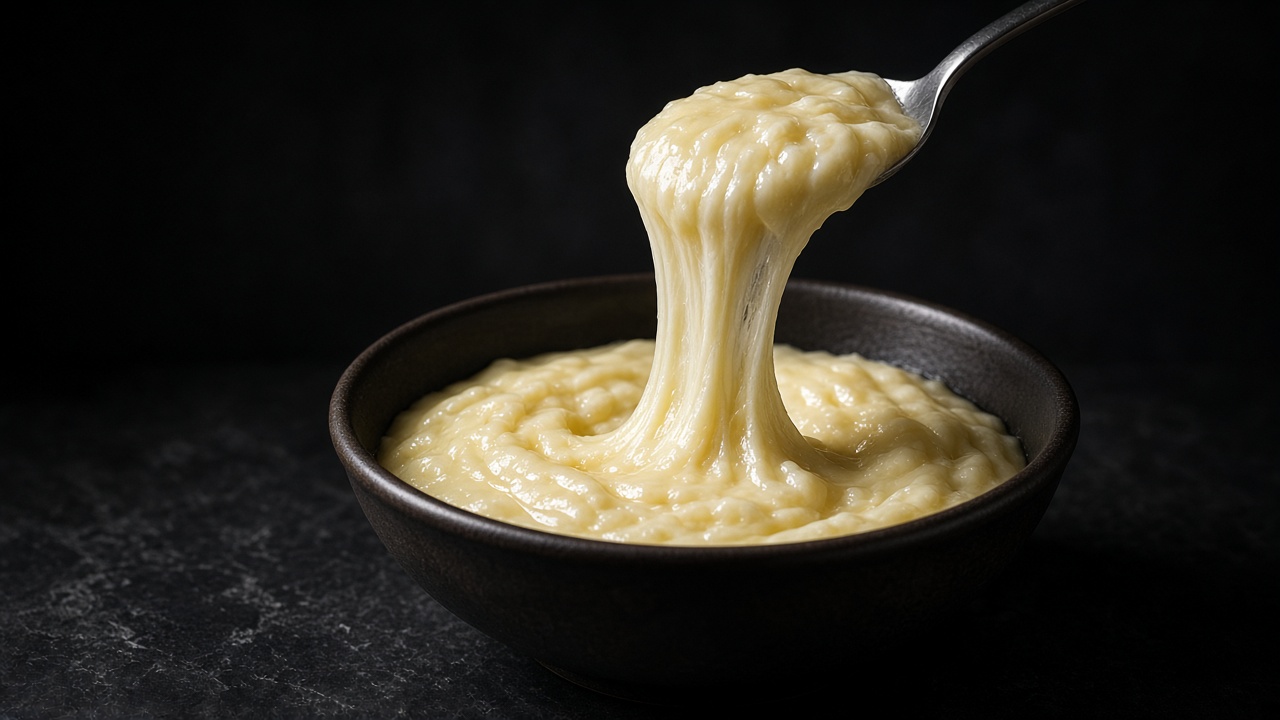
Aligot (Stretchy Cheese and Garlic Mash)
Inspired by techniques from Serious Eats and NYT Cooking.
Potato mashed with garlic, cream and plenty of melting cheese is beaten hard until it turns glossy and stretches into long ribbons. It's rich, garlicky mash taken to its most indulgent extreme.
Always check the labels of the products you use.
Method
- 1
Boil the potatoes. Cover the peeled potato chunks with cold water, add the salt, whole garlic clove and thyme sprigs, and simmer for 15-20 minutes until very tender. Cooking the garlic and thyme in the water infuses the potato gently without any harsh raw garlic flavour.
- 2
Drain and rice. Drain well, discard the garlic and thyme, and pass the potatoes through a ricer straight back into the dry pan. Ricing while still hot keeps the purée smooth with no lumps to fight later.
- 3
Beat in butter and garlic. Over low heat, beat in the butter and the grated raw garlic until fully melted and smooth.
- 4
Add the cream. Beat in the hot cream in two additions, working each one in fully before adding the next, until the mixture is smooth and glossy.
- 5
Melt in the cheese. Add the cheese a handful at a time, beating hard in a figure-of-eight motion and lifting the spatula after each addition, until the mash turns glossy and stretches in long ribbons, about 4-6 minutes. This constant beating develops the cheese's elasticity — too much heat at this stage would make it split and turn oily, so keep it low.
- 6
Season and serve. Taste and season with the extra salt, then serve immediately while it's at its stretchiest, as aligot firms up quickly as it cools.
Storage
Aligot is really at its best eaten fresh, but leftovers keep in the fridge for up to 2 days. Reheat gently over low heat, beating in a splash of warm cream or milk, until piping hot and stretchy again. Cool leftovers in a shallow container and refrigerate within 2 hours (within 1 hour on a day above 32°C).
EU nutrition claims
- Source of protein: 3.1 g protein per 100 kcal, about 12% of energy (needs ≥ 12%)
- Low sugars: 2.4 g sugars per 100 g (limit ≤ 5 g)
Per 100 g of the finished dish, worked out from the nutrition per serving and the lowest likely cooked weight (about 93 g a serving), so the true values are, if anything, lower. Thresholds from the Annex to EU Regulation (EC) No 1924/2006. How we decide
Free sugars
0 g per serving
0 % of the 50 g daily maximum · 0 % of the ideal 25 g
Free sugars under 50 g a day, ideally about 25 g, based on WHO free-sugar guidance (not endorsed by WHO). The share shown is the share of one serving. WHO
Equipment
- large saucepan
- colander
- potato ricer or food mill
- sturdy silicone spatula or wooden spoon
Nutrition per serving (estimated values)
| Per serving | Amount |
|---|---|
| Energy | 462 kcal |
| Protein | 14.2 g |
| Carbohydrate | 21.7 g |
| of which sugars | 2.2 g |
| of which free sugars | 0 g |
| Fat | 36.2 g |
| of which saturates | 22.6 g |
| Fibre | 2.4 g |
| Salt | 1.35 g |
Protein per 100 kcal
3.1 g High Protein needs ≥ 5 g (20% of energy)
Calculated from USDA FoodData Central ingredient values