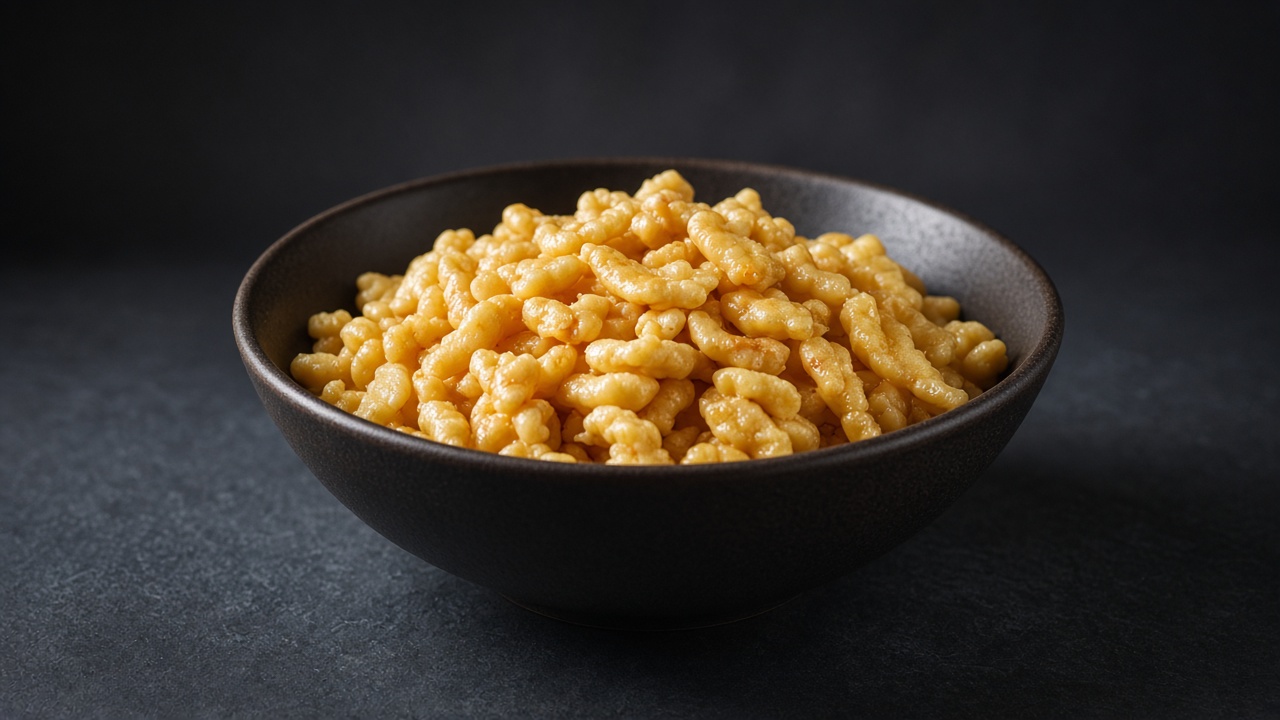
Buttered Spätzle with Parsley
Inspired by techniques from America's Test Kitchen and Serious Eats.
Soft egg batter dumplings cooked in batches, then finished with a light fry in butter and tossed with parsley.
Always check the labels of the products you use.
Method
- 1
Make the batter. Whisk the flour, salt and nutmeg together in a bowl, then in a separate jug whisk the eggs with the milk. Beat the egg mixture into the flour with a wooden spoon for 2-3 minutes, until the batter turns smooth, thick and elastic, falling slowly off the spoon in ribbons and showing small bubbles on the surface - this beating builds just enough gluten to hold the little dumplings together once cooked.
- 2
Rest the batter. Leave the batter to rest for 20 minutes before cooking.
- 3
Cook the spätzle. Bring 4 litres of water to a simmer with the 32 g salt. Working in 3 batches, press the batter through a spätzle maker, or through a colander held over the pot using a spatula, letting it drop straight into the water. The spätzle are ready about 1 minute after they float to the surface; cook them for 30 seconds more, then lift out with a slotted spoon and drain well.
- 4
Fry in butter. Melt the butter in a large frying pan over medium heat until it foams, then add the drained spätzle. Toss for 3-4 minutes, until hot through and catching a little golden colour in places - this light fry adds a toasty edge that plain boiling wouldn't give.
- 5
Finish and serve. Toss the spätzle with the chopped parsley and black pepper, then serve straight from the pan while hot.
Storage
Cooked spätzle keep in the fridge for up to 3 days, or can be frozen for up to 2 months. Reheat in a frying pan with a little extra butter until piping hot throughout. Cool leftovers in a shallow container and refrigerate within 2 hours (within 1 hour on a day above 32°C).
EU nutrition claims
- Source of protein: 3.3 g protein per 100 kcal, about 13% of energy (needs ≥ 12%)
- Low sugars: 1.8 g sugars per 100 g (limit ≤ 5 g)
Per 100 g of the finished dish, worked out from the nutrition per serving and the lowest likely cooked weight (about 129 g a serving), so the true values are, if anything, lower. Thresholds from the Annex to EU Regulation (EC) No 1924/2006. How we decide
Free sugars
0 g per serving
0 % of the 50 g daily maximum · 0 % of the ideal 25 g
Free sugars under 50 g a day, ideally about 25 g, based on WHO free-sugar guidance (not endorsed by WHO). The share shown is the share of one serving. WHO
Equipment
- large bowl
- wooden spoon
- large pot (at least 5 litres)
- spätzle maker, or a colander or perforated tray with 5-6 mm holes
- slotted spoon or spider strainer
- large frying pan
Nutrition per serving (estimated values)
| Per serving | Amount |
|---|---|
| Energy | 423 kcal |
| Protein | 13.8 g |
| Carbohydrate | 59.6 g |
| of which sugars | 2.3 g |
| of which free sugars | 0 g |
| Fat | 13.7 g |
| of which saturates | 7.2 g |
| Fibre | 2.1 g |
| Salt | 1.37 g |
Protein per 100 kcal
3.3 g High Protein needs ≥ 5 g (20% of energy)
Calculated from USDA FoodData Central ingredient values