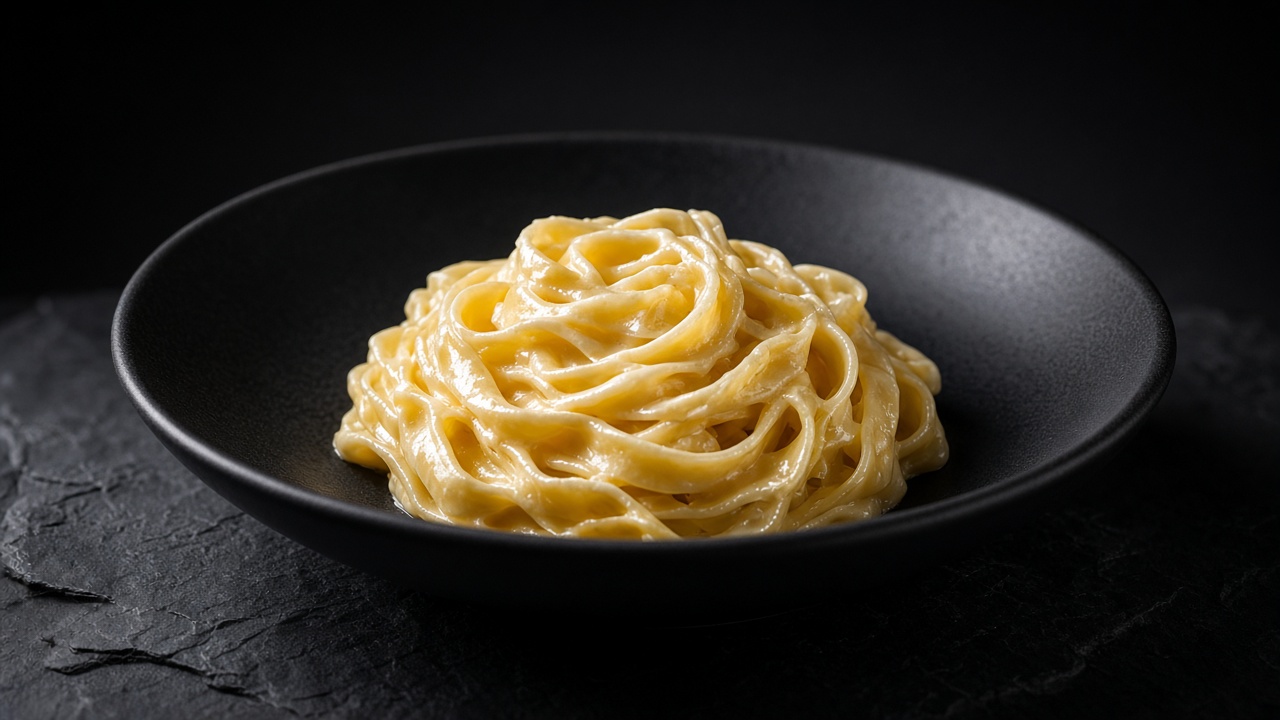
Roman-Style Fettuccine Alfredo (Butter and Parmesan, No Cream)
Inspired by techniques from Serious Eats and America's Test Kitchen.
Fresh fettuccine tossed with butter, Parmesan and starchy pasta water until it forms a creamy sauce with no cream at all.
Always check the labels of the products you use.
Method
- 1
Warm the Bowl. Fill the mixing bowl with hot water to warm it through, then dry it thoroughly and add the diced butter and 80g of the Parmesan. A warm bowl keeps the butter soft and ready to melt quickly once the hot pasta goes in, rather than seizing against a cold surface.
- 2
Boil the Water and Cook the Pasta. Bring the 3 litres of water to the boil with the salt, then cook the fettuccine for 1½-2 minutes. Fresh pasta cooks very quickly and should still have a slight bite when it comes out.
- 3
Transfer to the Bowl. Reserve 240ml of the pasta water, then lift the pasta straight from the pot into the bowl with tongs and add 120ml of the hot pasta water. Carrying some water over with the pasta keeps everything hot enough to melt the butter and cheese straight away.
- 4
Toss into a Creamy Sauce. Toss and lift the pasta vigorously for 1-2 minutes until the butter and cheese melt into a creamy, pale sauce that clings to the strands. The milk solids in the butter combine with the starchy water and melting cheese to form an emulsion, which is the only reason this sauce looks and feels creamy with no actual cream involved.
- 5
Loosen if Needed. If the sauce looks greasy or has seized up tight, add more of the reserved pasta water a spoonful at a time, tossing constantly, until it turns glossy and smooth again. A tight or oily-looking sauce simply needs a little more water to bring the emulsion back together. If the cheese has formed clumps instead of melting, tip everything back into the empty, still-hot pasta pot over the lowest heat and toss for 30 seconds, then take it off the heat, cover for 1 minute and toss hard once more.
- 6
Serve at Once. Serve immediately with the remaining Parmesan and a little black pepper, keeping in mind the sauce will thicken further as it cools.
Storage
Best eaten fresh, as the butter-based sauce doesn't hold well; leftovers can be kept covered in the fridge for up to a day. Reheat gently in a pan with a splash of water over low heat, tossing until piping hot, as it can separate if reheated too fiercely. Cool leftovers in a shallow container and refrigerate within 2 hours (within 1 hour on a day above 32°C).
EU nutrition claims
- Source of protein: 3.6 g protein per 100 kcal, about 14% of energy (needs ≥ 12%)
- Sugar-free: 0.2 g sugars per 100 g (limit ≤ 0.5 g)
Per 100 g of the finished dish, worked out from the nutrition per serving and the lowest likely cooked weight (about 128 g a serving), so the true values are, if anything, lower. Thresholds from the Annex to EU Regulation (EC) No 1924/2006. How we decide
Free sugars
0 g per serving
0 % of the 50 g daily maximum · 0 % of the ideal 25 g
Free sugars under 50 g a day, ideally about 25 g, based on WHO free-sugar guidance (not endorsed by WHO). The share shown is the share of one serving. WHO
Equipment
- large pot (at least 4 litres)
- large heatproof mixing bowl (warmed)
- fine grater (rasp)
- tongs
- heatproof mug
Nutrition per serving (estimated values)
| Per serving | Amount |
|---|---|
| Energy | 566 kcal |
| Protein | 20.5 g |
| Carbohydrate | 55.6 g |
| of which sugars | 0.2 g |
| of which free sugars | 0 g |
| Fat | 29 g |
| of which saturates | 17.3 g |
| Fibre | 0 g |
| Salt | 1.61 g |
Protein per 100 kcal
3.6 g High Protein needs ≥ 5 g (20% of energy)
Calculated from USDA FoodData Central ingredient values