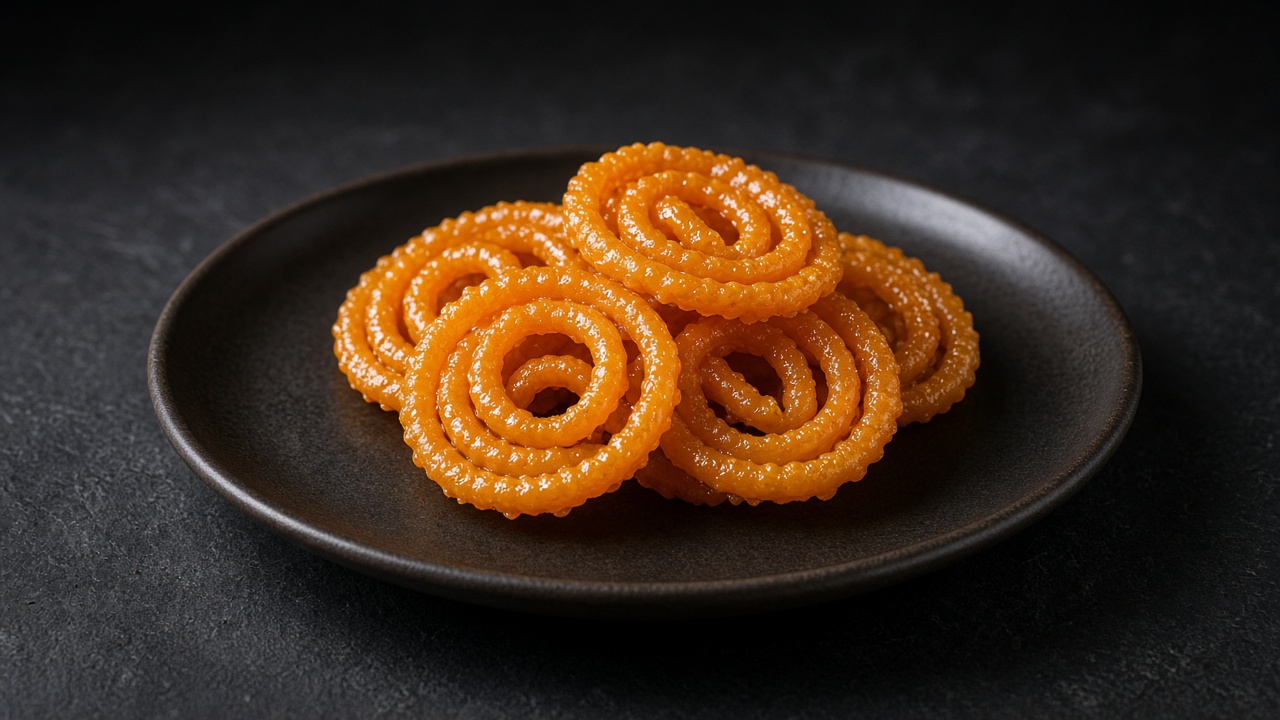
Jalebi: Crisp Fermented Batter Spirals in Saffron Syrup
Inspired by techniques from King Arthur Baking.
A lightly soured batter piped into spirals, fried crisp and dipped briefly in a saffron and cardamom syrup.
Always check the labels of the products you use.
Method
- 1
Mix the batter. Whisk the plain flour, gram flour, cardamom and saffron together in the bowl. Whisk in the yoghurt, lukewarm water and food colouring if using until smooth, thick and falling from the whisk in a ribbon.
- 2
Ferment overnight. Cover the bowl and leave it somewhere warm for 12-24 h. It is ready when the top is dotted with bubbles and it smells pleasantly sour; the fermentation gives jalebi their tang and crisp, airy texture. Whisk briefly before using.
- 3
Make the syrup. Bring the sugar, 230 ml water, saffron, cardamom and lime juice to the boil, then simmer until it reaches 107-110 °C and feels slightly tacky between two fingers. Add the rose water if using and let it cool to 65-70 °C, then hold it there. Syrup that is too hot softens the jalebi; too cool and it will not soak in.
- 4
Heat the oil. Pour oil into the wide pan to about 2.5 cm deep and heat to 165 °C. A shallow layer at a moderate heat lets the spirals cook through and crisp before they brown.
- 5
Pipe the spirals. Fill the piping bag and pipe 7-8 cm spirals directly into the oil, 3 or 4 at a time, working from the outside and finishing in the centre. Keep the bag moving steadily so the ropes stay even.
- 6
Fry until crisp. Fry for 45-60 s on each side, turning once with tongs, until crisp and lightly golden. Keep checking that the oil stays at 165 °C between batches.
- 7
Soak and serve. Lift each jalebi out, shake off the oil and drop it into the warm syrup for 30 s, pressing gently so it fills the hollow ropes. Set on the rack and repeat with the rest; serve warm or at room temperature the same day.
Storage
Jalebi are best eaten the day they are made. Keep leftovers loosely covered at room temperature for up to 1 day; they soften as they stand.
EU nutrition claims
- Low saturated fat: 1 g saturated fat per 100 g, 2.5% of energy (limits ≤ 1.5 g and ≤ 10%)
- Low salt: 0.01 g salt per 100 g (limit ≤ 0.3 g)
Per 100 g of the finished dish, worked out from the nutrition per serving and the lowest likely cooked weight (about 67 g a serving), so the true values are, if anything, lower. Thresholds from the Annex to EU Regulation (EC) No 1924/2006. How we decide
Free sugars
26.6 g per serving
53.2 % of the 50 g daily maximum · 106.4 % of the ideal 25 g
Free sugars under 50 g a day, ideally about 25 g, based on WHO free-sugar guidance (not endorsed by WHO). The share shown is the share of one serving. WHO
Equipment
- medium bowl
- whisk
- cling film
- medium saucepan
- sugar thermometer
- wide deep frying pan or karahi
- piping bag with a 5 mm plain nozzle or a squeeze bottle
- tongs
- wire rack
Nutrition per serving (estimated values)
| Per serving | Amount |
|---|---|
| Energy | 250 kcal |
| Protein | 3.1 g |
| Carbohydrate | 43.5 g |
| of which sugars | 27.2 g |
| of which free sugars | 26.6 g |
| Fat | 7.3 g |
| of which saturates | 0.7 g |
| Fibre | 0.8 g |
| Salt | 0.01 g |
Protein per 100 kcal
1.2 g High Protein needs ≥ 5 g (20% of energy)
Calculated from USDA FoodData Central ingredient values