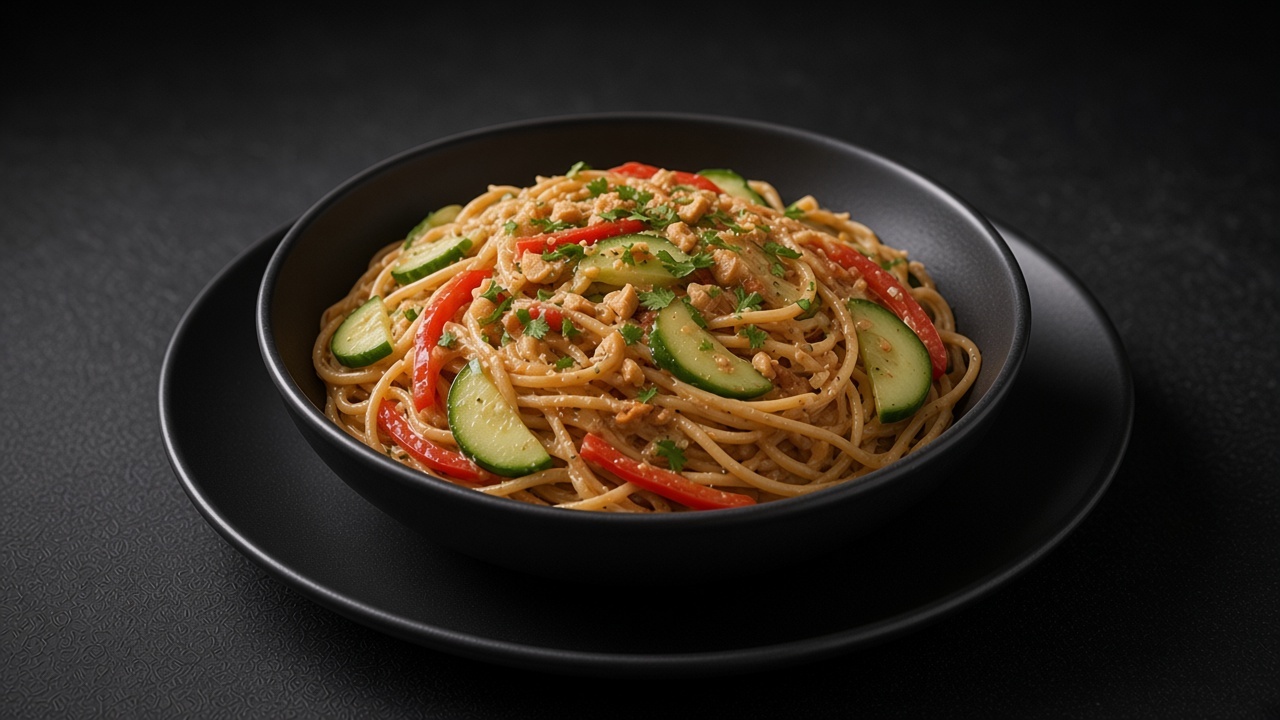
Peanut Noodle Salad
Inspired by techniques from America's Test Kitchen.
Cooled spaghetti is tossed with a peanut butter, soy sauce and vinegar dressing loosened with starchy pasta water, then mixed through with crisp cucumber and red pepper. It is a cold, make-ahead noodle dish built for a crowd, with the vegetables staying crunchy against the rich, tangy sauce.
Always check the labels of the products you use.
Method
- 1
Cook the pasta. Bring about 3.8 litres of water to a boil in a large pot. Add the pasta and the fine salt and cook until al dente, following the packet timing. Reserve 180 ml of the cooking water, then drain the pasta in a colander, rinse under cold water until fully cool, and drain again.
- 2
Coat the noodles. Transfer the noodles to a large bowl, add the sesame oil, and toss to coat.
- 3
Make the dressing. In a medium bowl, whisk the peanut butter, soy sauce, vinegar, ginger, hot sauce and 90 ml of the reserved pasta water together until smooth.
- 4
Toss and serve. Add the dressing, cucumber, red pepper and coriander to the noodles and toss to combine, working in more of the reserved pasta water as needed until the dressing coats everything in a thin, glossy layer. Serve.
Storage
The oiled noodles, dressing and vegetables keep well stored separately in airtight containers in the refrigerator for up to 2 days; bring to room temperature and toss together just before serving, loosening the dressing with a little warm water if needed. Once tossed, the salad is best eaten the same day. Cool leftovers in a shallow container and refrigerate within 2 hours (within 1 hour on a day above 32°C).
EU nutrition claims
- Source of protein: 3.6 g protein per 100 kcal, about 14% of energy (needs ≥ 12%)
- Low sugars: 4.1 g sugars per 100 g (limit ≤ 5 g)
Per 100 g of the finished dish, worked out from the nutrition per serving and the lowest likely cooked weight (about 182 g a serving), so the true values are, if anything, lower. Thresholds from the Annex to EU Regulation (EC) No 1924/2006. How we decide
Free sugars
0 g per serving
0 % of the 50 g daily maximum · 0 % of the ideal 25 g
Free sugars under 50 g a day, ideally about 25 g, based on WHO free-sugar guidance (not endorsed by WHO). The share shown is the share of one serving. WHO
Equipment
- large pot
- colander
- chef's knife
- chopping board
- fine grater
- whisk
- medium bowl
- large bowl
Nutrition per serving (estimated values)
| Per serving | Amount |
|---|---|
| Energy | 554 kcal |
| Protein | 20 g |
| Carbohydrate | 65.9 g |
| of which sugars | 7.4 g |
| of which free sugars | 0 g |
| Fat | 24.7 g |
| of which saturates | 3.8 g |
| Fibre | 5.3 g |
| Salt | 2.54 g |
Protein per 100 kcal
3.6 g High Protein needs ≥ 5 g (20% of energy)
Calculated from USDA FoodData Central ingredient values