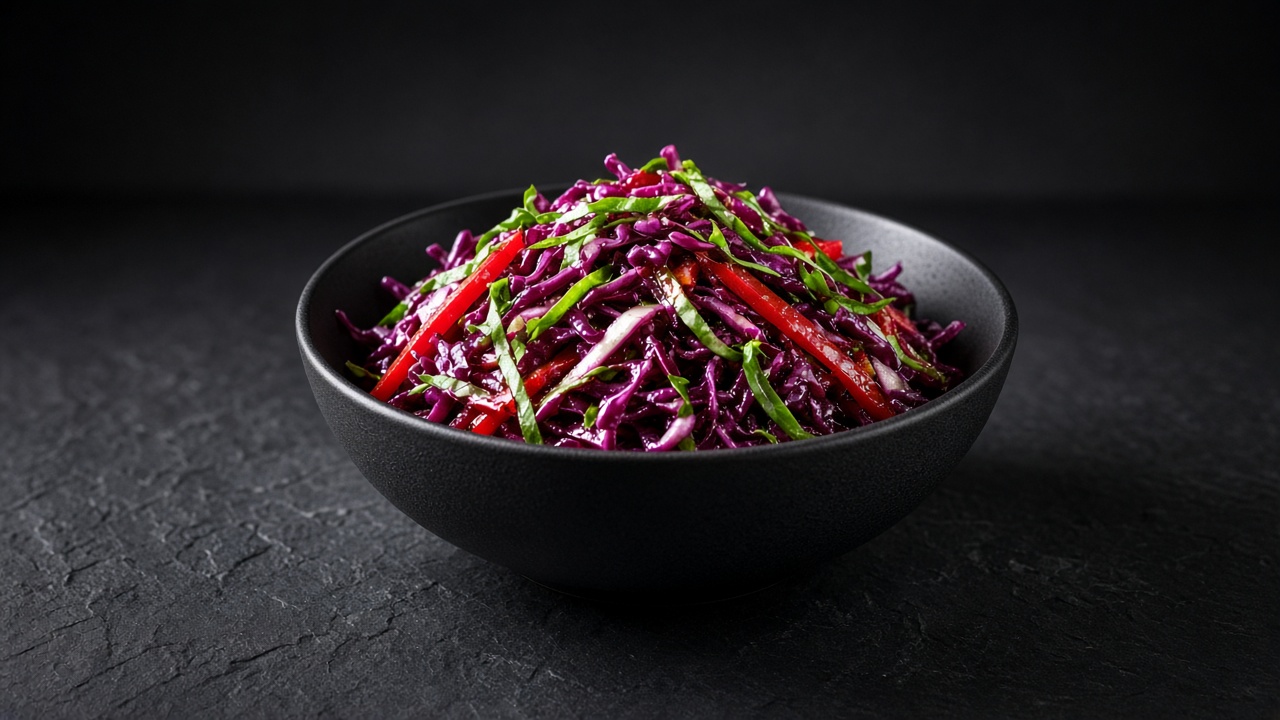
Red Cabbage and Basil Slaw
Inspired by techniques from America's Test Kitchen.
Shredded red cabbage and thin strips of red pepper get tossed with torn basil, then dressed with a quick balsamic-honey vinaigrette whisked right in the bowl. It's a crunchy, no-cook slaw that's ready in the time it takes to shred the cabbage.
Always check the labels of the products you use.
Method
- 1
Combine the vegetables. Combine the cabbage, pepper and basil in a large bowl.
- 2
Make the dressing. Whisk the vinegar, honey, salt and pepper together in a small bowl until the honey has dissolved. Whisking constantly, drizzle in the olive oil until combined.
- 3
Dress and serve. Pour the dressing over the cabbage mixture and toss well to coat. Taste and adjust the salt and pepper, then serve.
Storage
Best tossed and served right away, while the cabbage still has its crunch. Undressed shredded cabbage and pepper keep refrigerated in an airtight container for up to 2 days.
EU nutrition claims
- Low saturated fat: 0.5 g saturated fat per 100 g, 7.1% of energy (limits ≤ 1.5 g and ≤ 10%)
- Low sugars: 4.9 g sugars per 100 g (limit ≤ 5 g)
- High fibre: 3.1 g fibre per 100 kcal (needs ≥ 3 g)
Per 100 g of the finished dish, worked out from the nutrition per serving and the lowest likely cooked weight (about 197 g a serving), so the true values are, if anything, lower. Thresholds from the Annex to EU Regulation (EC) No 1924/2006. How we decide
Free sugars
2.6 g per serving
5.2 % of the 50 g daily maximum · 10.4 % of the ideal 25 g
Free sugars under 50 g a day, ideally about 25 g, based on WHO free-sugar guidance (not endorsed by WHO). The share shown is the share of one serving. WHO
Equipment
- chef's knife
- chopping board
- large bowl
- small bowl
- whisk
Nutrition per serving (estimated values)
| Per serving | Amount |
|---|---|
| Energy | 127 kcal |
| Protein | 2.6 g |
| Carbohydrate | 15.7 g |
| of which sugars | 9.6 g |
| of which free sugars | 2.6 g |
| Fat | 7.1 g |
| of which saturates | 1 g |
| Fibre | 3.9 g |
| Salt | 0.84 g |
Protein per 100 kcal
2 g High Protein needs ≥ 5 g (20% of energy)
Calculated from USDA FoodData Central ingredient values