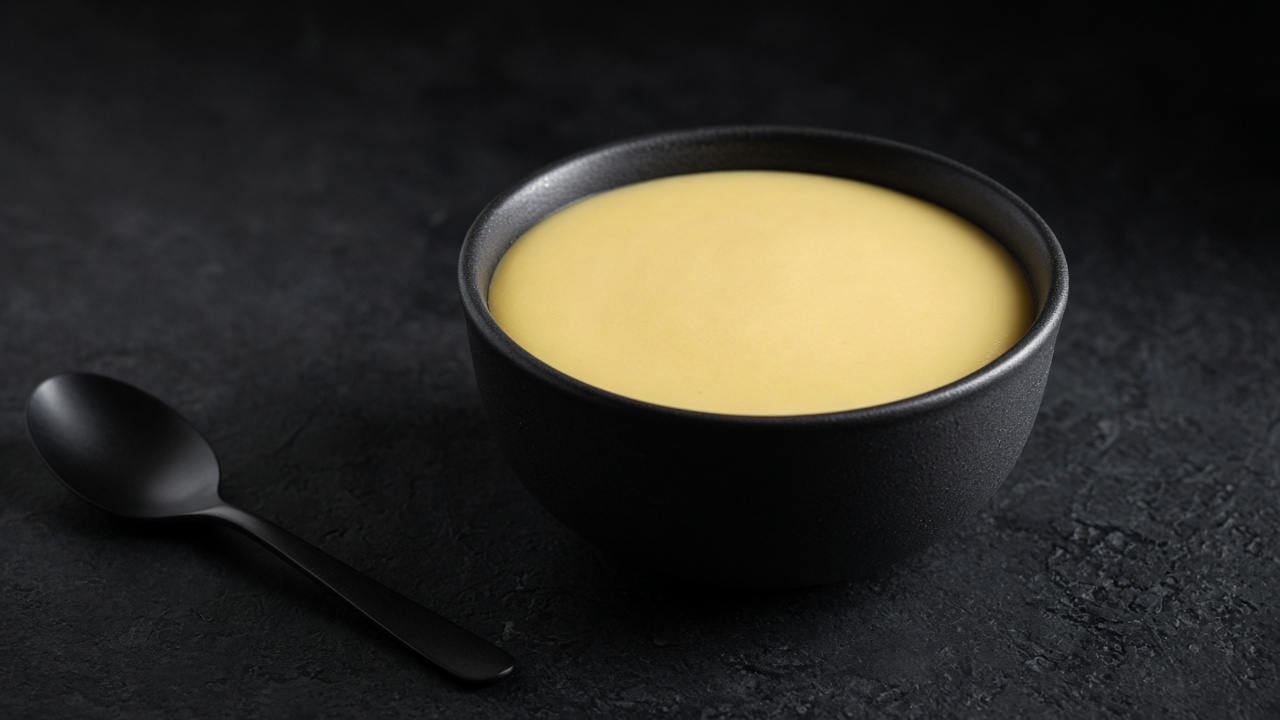
Simple Silky Lemon Cream Posset
Inspired by techniques from America's Test Kitchen and NYT Cooking.
The simplest posset: cream and sugar boiled together and set with fresh lemon juice into a silky, tangy cream.
Always check the labels of the products you use.
Method
- 1
Reduce. bring the cream, sugar and salt to the boil in the pan, stirring, then boil steadily 6-8 min, stirring often, until reduced to about 480 ml. Lift off the heat if it rises. Reducing concentrates the cream so it sets firmly.
- 2
Sharpen. off the heat, stir in the lemon juice; it will thicken a little at once. Acid makes the milk proteins thicken the cream.
- 3
Settle. leave 15-20 min until a skin begins to form, then stir and pour into the jug.
- 4
Set. divide between the glasses and chill uncovered for 3 h, until set like a soft cream. Cover after that. Leaving it uncovered stops drips from condensation.
- 5
Serve. take out of the fridge 10 min before eating so it is silky, not stiff.
Storage
Cover once set and keep in the fridge for up to 2 days. Do not freeze.
EU nutrition claims
- Low salt: 0.13 g salt per 100 g (limit ≤ 0.3 g)
Per 100 g of the finished dish, worked out from the nutrition per serving and the lowest likely cooked weight (about 91 g a serving), so the true values are, if anything, lower. Thresholds from the Annex to EU Regulation (EC) No 1924/2006. How we decide
Free sugars
22 g per serving
44 % of the 50 g daily maximum · 88 % of the ideal 25 g
Free sugars under 50 g a day, ideally about 25 g, based on WHO free-sugar guidance (not endorsed by WHO). The share shown is the share of one serving. WHO
Equipment
- medium saucepan
- silicone spatula
- heatproof jug
- 6 small glasses or ramekins
- cling film
Nutrition per serving (estimated values)
| Per serving | Amount |
|---|---|
| Energy | 359 kcal |
| Protein | 2.3 g |
| Carbohydrate | 25 g |
| of which sugars | 24.3 g |
| of which free sugars | 22 g |
| Fat | 28.9 g |
| of which saturates | 18.4 g |
| Fibre | 0 g |
| Salt | 0.12 g |
Protein per 100 kcal
0.6 g High Protein needs ≥ 5 g (20% of energy)
Calculated from USDA FoodData Central ingredient values