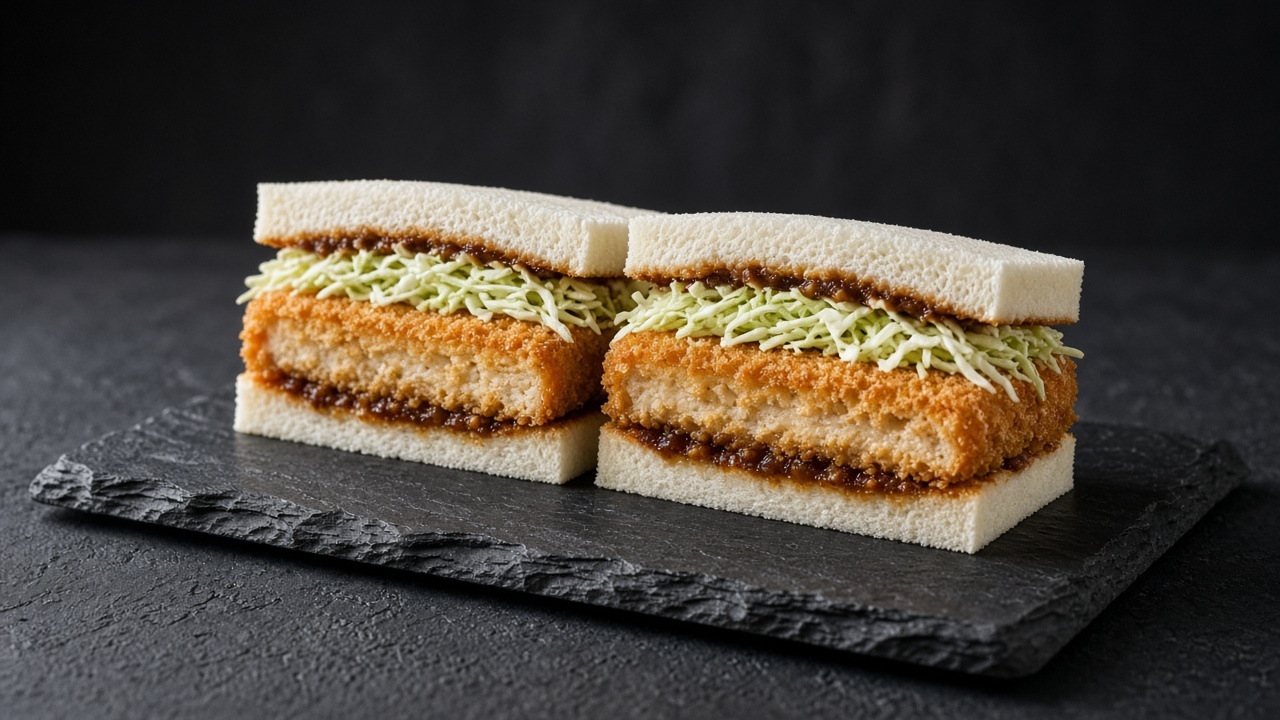
Tofu Katsu Sando with Tangy Katsu Sauce and Sesame Cabbage
Inspired by techniques from America's Test Kitchen.
Crisp panko-coated tofu slabs layered with tangy sesame cabbage and a sweet-savoury sauce between soft white bread, a vegetarian take on the chicken katsu sando.
Always check the labels of the products you use.
Method
- 1
Sauce. Whisk 60 g ketchup, 4 tsp Worcestershire sauce, 2 tsp soy sauce, 1 tsp garlic powder and ½ tsp sugar together.
- 2
Coat. Whisk the 2 eggs with 2 tbsp flour in one dish and crush 75 g panko into a second dish, then cut the 400 g tofu into 8 slabs, pat dry, season with ½ tsp salt, dip in egg and press into the panko.
- 3
Fry. Heat the oil in a nonstick pan over medium-high and fry the tofu until deep golden, 2-3 min per side, then drain briefly on paper and move to a rack.
- 4
Cabbage. Toss the shredded cabbage with 2½ tsp rice vinegar, 1½ tsp sesame oil and the remaining sugar.
- 5
Assemble. Layer bread, cabbage, 2 tofu slabs and sauce, then top with a second slice of bread.
- 6
Serve. Press lightly, trim the crusts, halve and serve.
Storage
Best assembled and eaten straight away while the tofu is still crisp. Cool leftovers in a shallow container and refrigerate within 2 hours (within 1 hour on a day above 32°C).
Why this label?
29.4 g protein for 550 kcal = 5.3 g per 100 kcal, so protein gives about 21% of the energy. High Protein needs at least 20% (5 g per 100 kcal), the condition in the Annex to EU Regulation (EC) No 1924/2006. How we decide
EU nutrition claims
- Low sugars: 4.8 g sugars per 100 g (limit ≤ 5 g)
Per 100 g of the finished dish, worked out from the nutrition per serving and the lowest likely cooked weight (about 225 g a serving), so the true values are, if anything, lower. Thresholds from the Annex to EU Regulation (EC) No 1924/2006. How we decide
Free sugars
8.5 g per serving
17 % of the 50 g daily maximum · 34 % of the ideal 25 g
Free sugars under 50 g a day, ideally about 25 g, based on WHO free-sugar guidance (not endorsed by WHO). The share shown is the share of one serving. WHO
Equipment
- 2 shallow dishes
- food bag and rolling pin
- wire rack set in a tray
- kitchen paper
- 30 cm nonstick frying pan
- large bowl
- bread knife
Nutrition per serving (estimated values)
| Per serving | Amount |
|---|---|
| Energy | 550 kcal |
| Protein | 29.4 g |
| Carbohydrate | 57 g |
| of which sugars | 10.8 g |
| of which free sugars | 8.5 g |
| Fat | 24.6 g |
| of which saturates | 3.6 g |
| Fibre | 6.2 g |
| Salt | 2.75 g |
Protein per 100 kcal
5.3 g meets High Protein (≥ 5 g, 20% of energy)
Calculated from USDA FoodData Central ingredient values